
My name is Michael Williams. Having lived in Otsego for nearly two decades, I’ve watched our town transform—fields giving way to developments, roads filling with early-morn commute, newcomers arriving with fresh eyes and high expectations. These changes bring opportunities, but also tensions, especially when different perspectives clash over what Otsego should become.
The pace of growth and what it feels like
In recent years, Otsego has added an average of about 300 new homes per year, with a rising population and increasing demands on water, sewer, infrastructure, parks, and public safety. These figures aren’t just statistics; they are the cars on Radford Avenue, the crowded playgrounds at Prairie Park, and the springboard of debate at city meetings. Many of us—long-time families—see the benefits: new neighbors, more businesses, more energy. But we also see stretched resources, rising property taxes, and worries about losing the close-knit feel that drew us here in the first place. “I moved here for peace,” someone said recently, but peace now means traffic, new development, and sometimes feeling overlooked.
Infrastructure: the backbone under pressure
With growth comes strain. Our water system, supplied by wells, is undergoing serious upgrades—new wellhouses, planning for a new treatment facility, and studies of future sources. Residents want reliable, safe water, but those upgrades cost money and time. While health-based violations recorded long ago in drinking water have since been resolved, transparency about how we keep water safe should be more than municipal jargon—it’s about health and trust.
Other infrastructure—roads, sewers, emergency services—feel the ripples of change too. New trails and parks are welcome, but who maintains them, who cleans them, who pays for them? The city’s Comprehensive Plan, updated recently, tries to map out future needs, but implementation requires coordination between the city, county, and residents who may see things very differently. What seems necessary to some looks excessive to others.
Community identity: balancing roots and arrival
Otsego’s heritage—founded in the 1850s, shaped by farms cleared from the “Big Woods,” early schools and trails built by neighbors helping neighbors—grounds us. Prairie Park sits where early settlers gathered; many farm roads still follow their original paths. These are more than historical quirks; they are reminders of our character as a place built by people working together.
Yet as newcomers arrive—drawn by the mix of suburban access and rural feel—that identity is evolving. Parents seeking quality schools, professionals commuting to work in the Twin Cities, builders seeking cheaper land—all bring their hopes. If we are to grow wisely, then we need shared values: preserving green space, maintaining walkable parks, ensuring every child has a chance at a safe school, and keeping government responsive to all voices.
How we get through this together
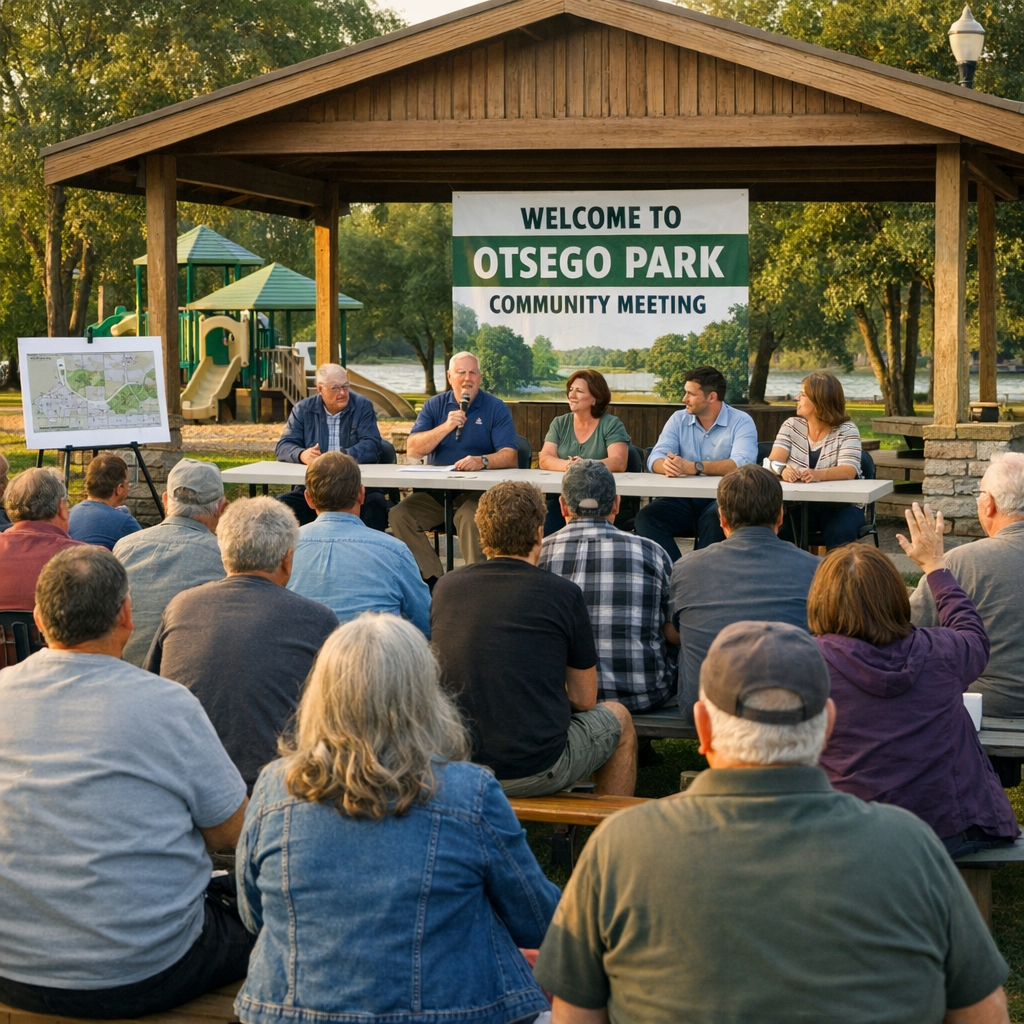
- Engagement matters: Attend city council and public safety commission meetings. Speak up. One neighbor’s concern about speeddemonstrated by data collection and placement of a speed radar trailer shows that civic involvement leads to action.
- Transparency and communication: When infrastructure costs rise, or when development is proposed, residents deserve clear explanations of what’s being built, what it costs, who benefits—and who bears the impact.
- Equity in planning: Growth shouldn’t leave existing neighborhoods behind. Maintenance of older roads, parks, water lines is as essential as building new ones in developing areas.
- Preserving heritage: Support the heritage site tours, historical books, stories of farms and founders. Our past shapes our values; knowing it helps us decide what we want in our future.
Otsego stands at a crossroads—not just of geography, but of identity. Will we be a place that keeps growing and becomes a city where neighbors feel distant? Or can we find a path where new meeting places are just that—momentum for community, not division? The work is ours. If we talk with each other, show up for one another, and hold fast to what we value, this change can be something we can all be proud of.